A window to the origins of the settlement

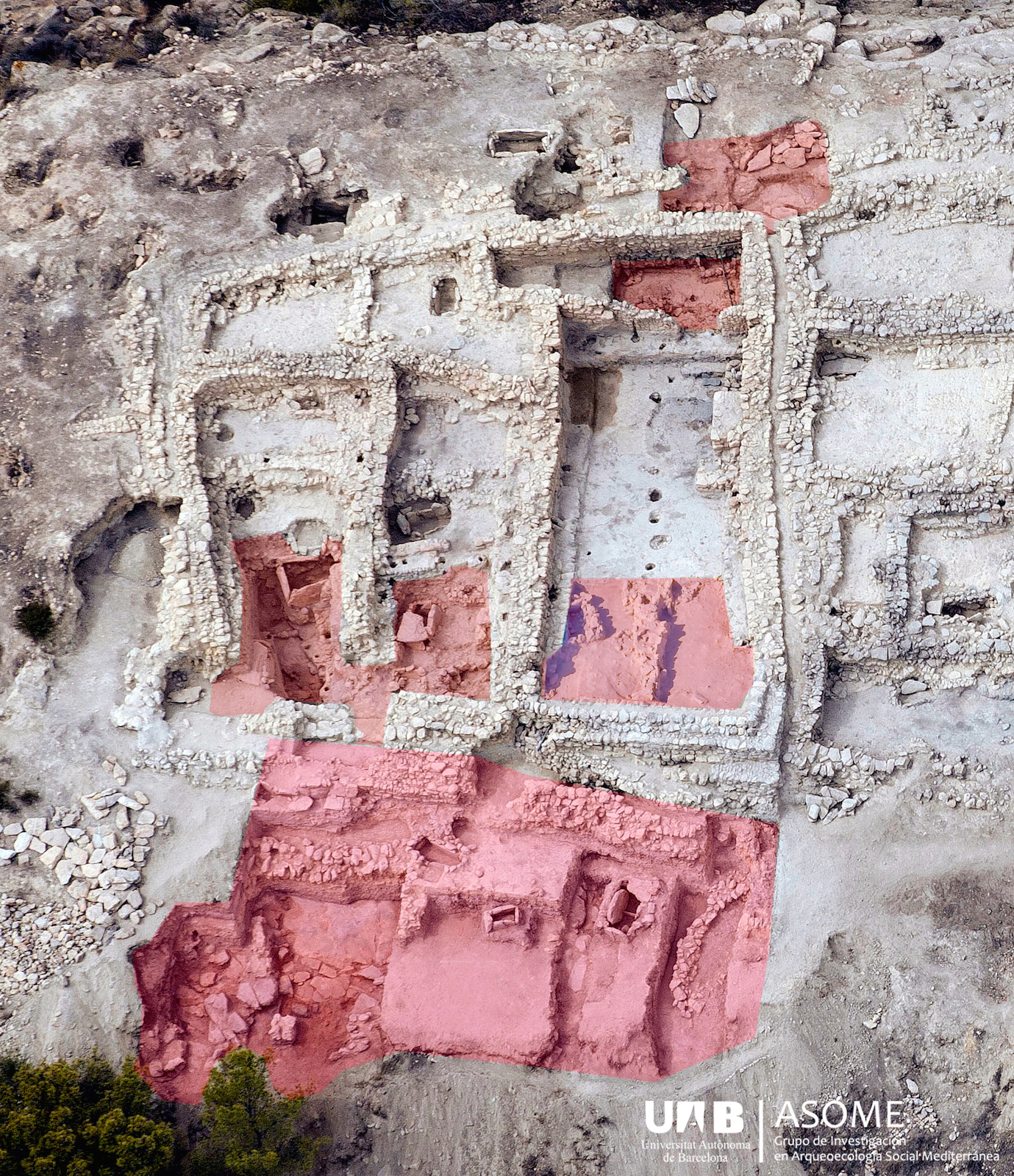
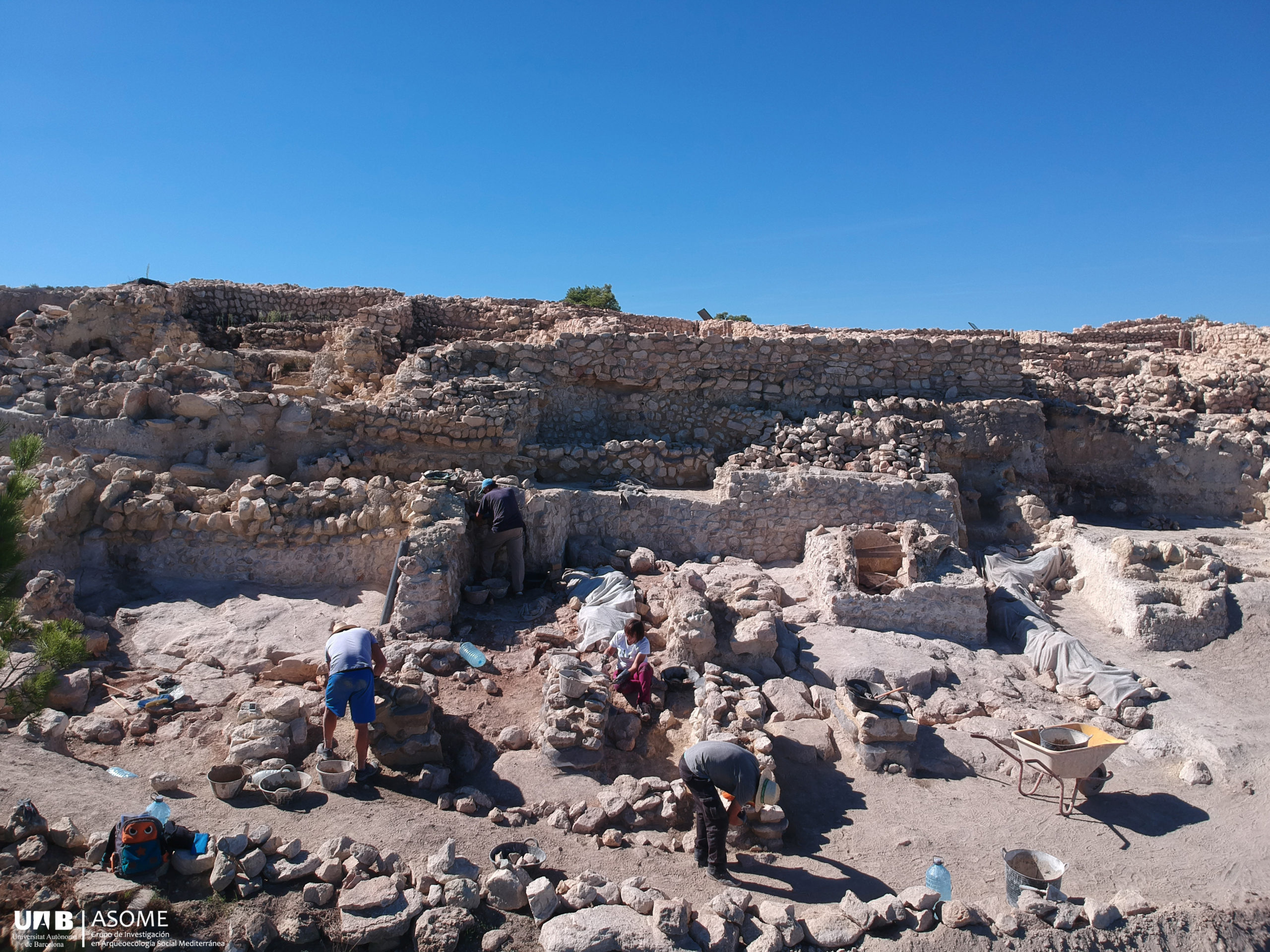
In this aerial shot from the East towards Housing Complex 1, we can see in red the underlying occupation levels. Digging probes in this sector showed that the hill had two previous settlements with different quality buildings and layouts from those of the final peak. Understandably, they were in their infancy around 2,200 BC. Yes, La Almoloya was occupied since the beginning of the Argaric times.
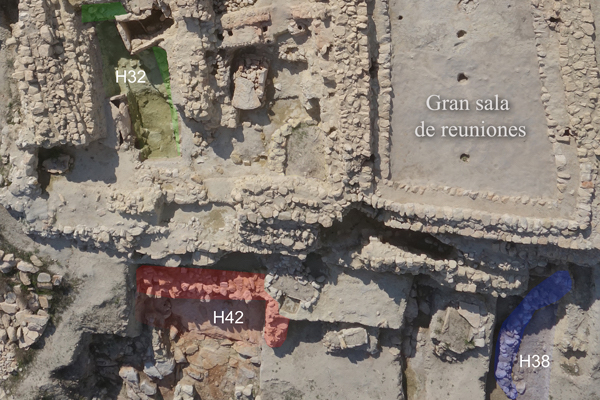
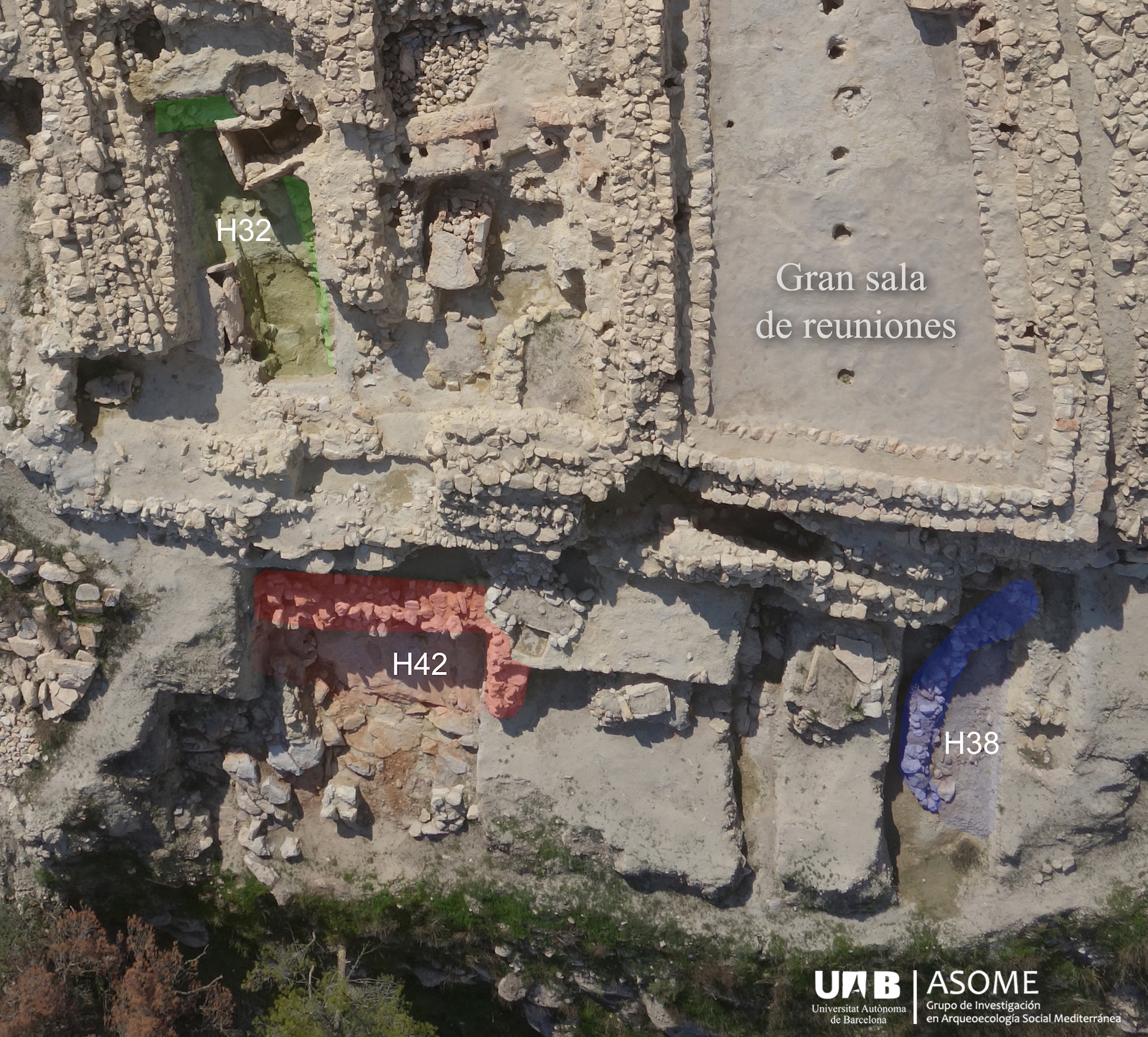
You can see highlighted in colour the remains of the walls of the first houses with a curvilinear tendency and some other rectilinear ones; they are only the stone bases, since the elevation was made with pug and posts to support the roof also made of clay and branches. These houses were built sheltered from the winds in the lower area of the top of the hill, which had a strong dip to the east. The trend towards the horizontal that we see today is due to the accumulation of construction remains over time.

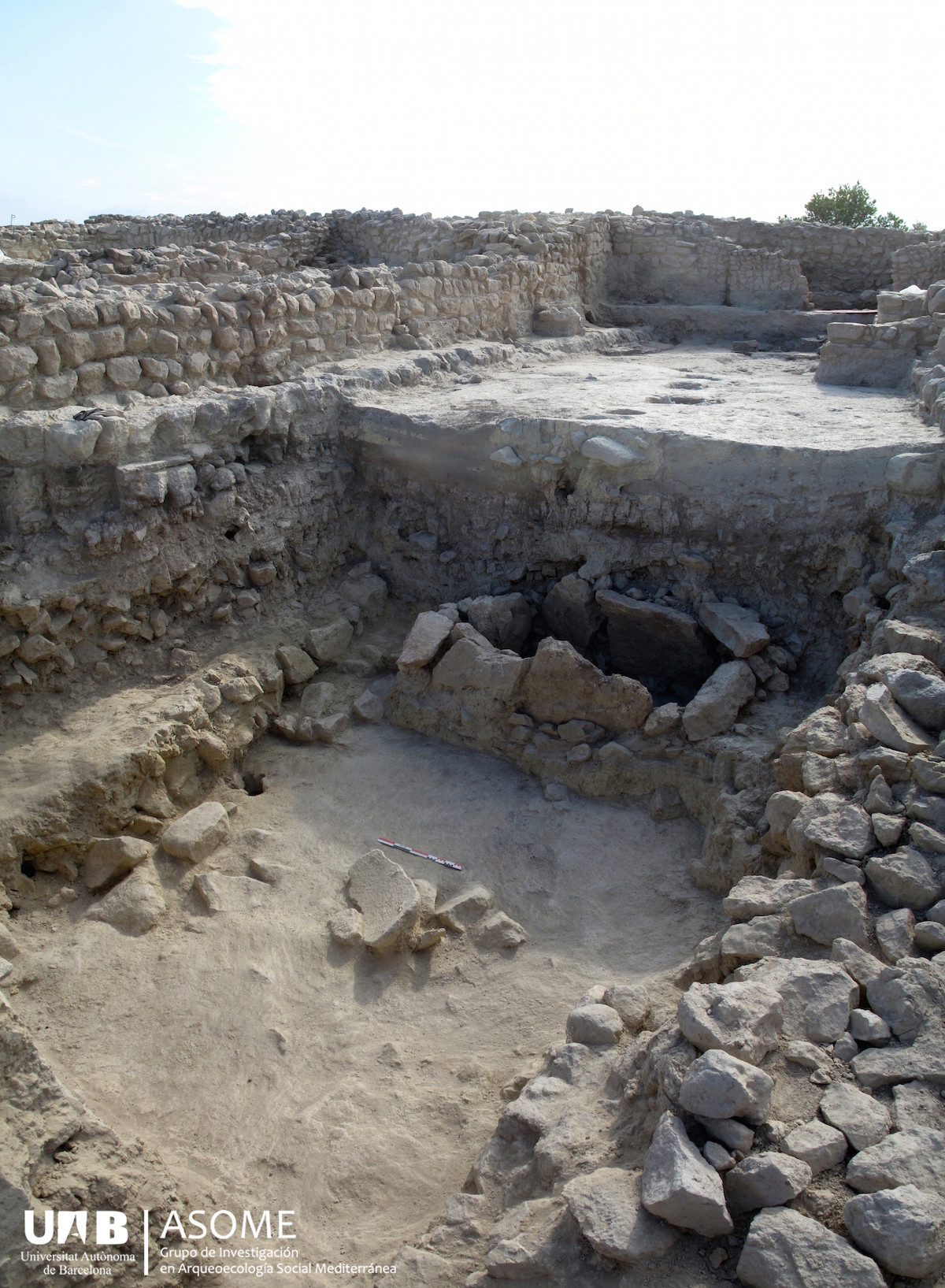
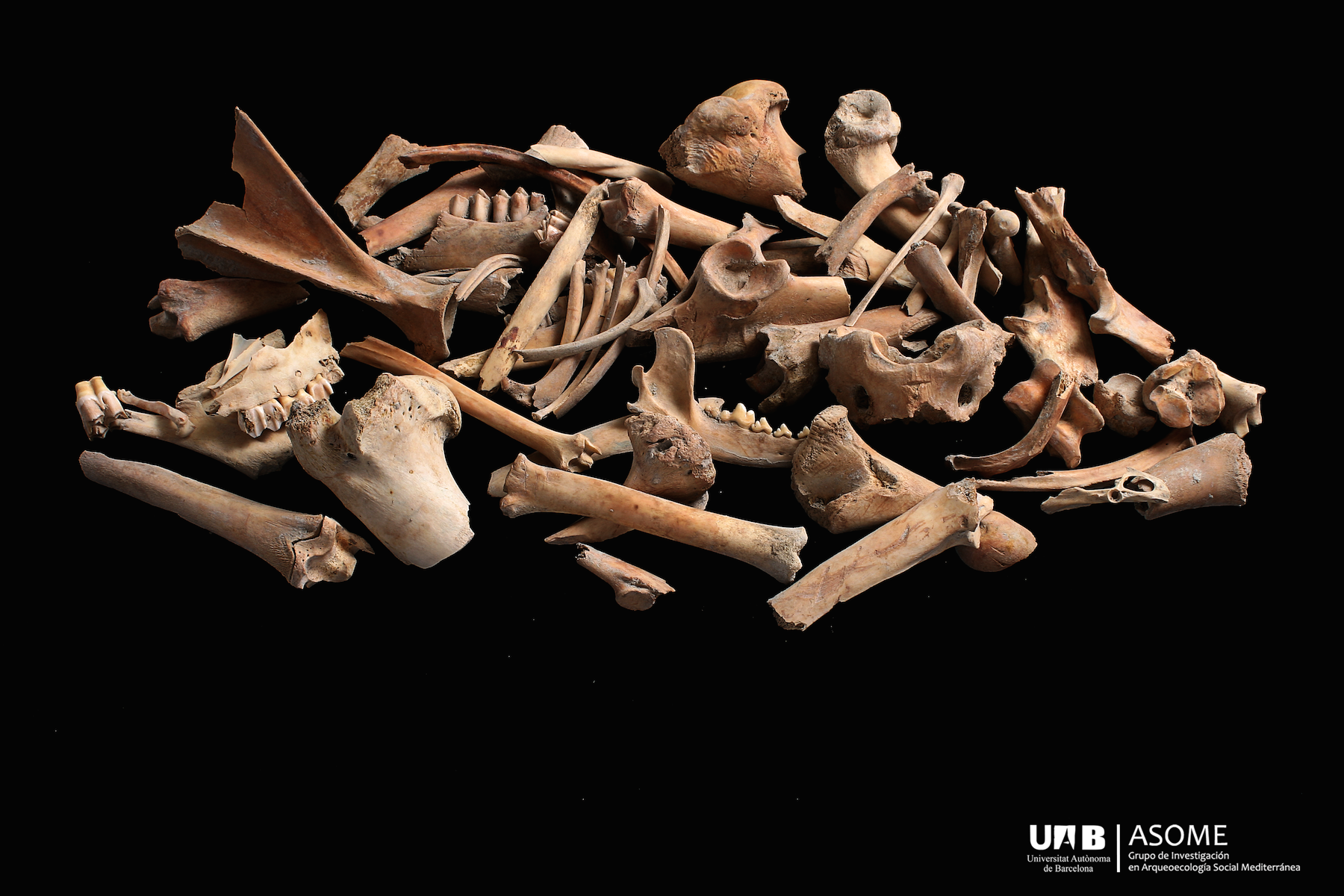
The top layer in the back preserves the floor and banquettes of the great room intact. Where the floor wasn’t preserved, we decided to dig for its origins. The room found below shows a different reality, with large cists (in the picture: burial AY21) that contained Argaric objects accompanied by others of uncertain origin and abundant remains of animals of different species, which reveal the importance of livestock and hunting in those early times.

The cut marks on the bones and the distribution by species in the different houses of these early times require a detailed study. The quantity and variety of the remains suggested an important economic activity.

Globular vessel found in room H42 of Zone 3, which has little to do with Argaric ceramics.

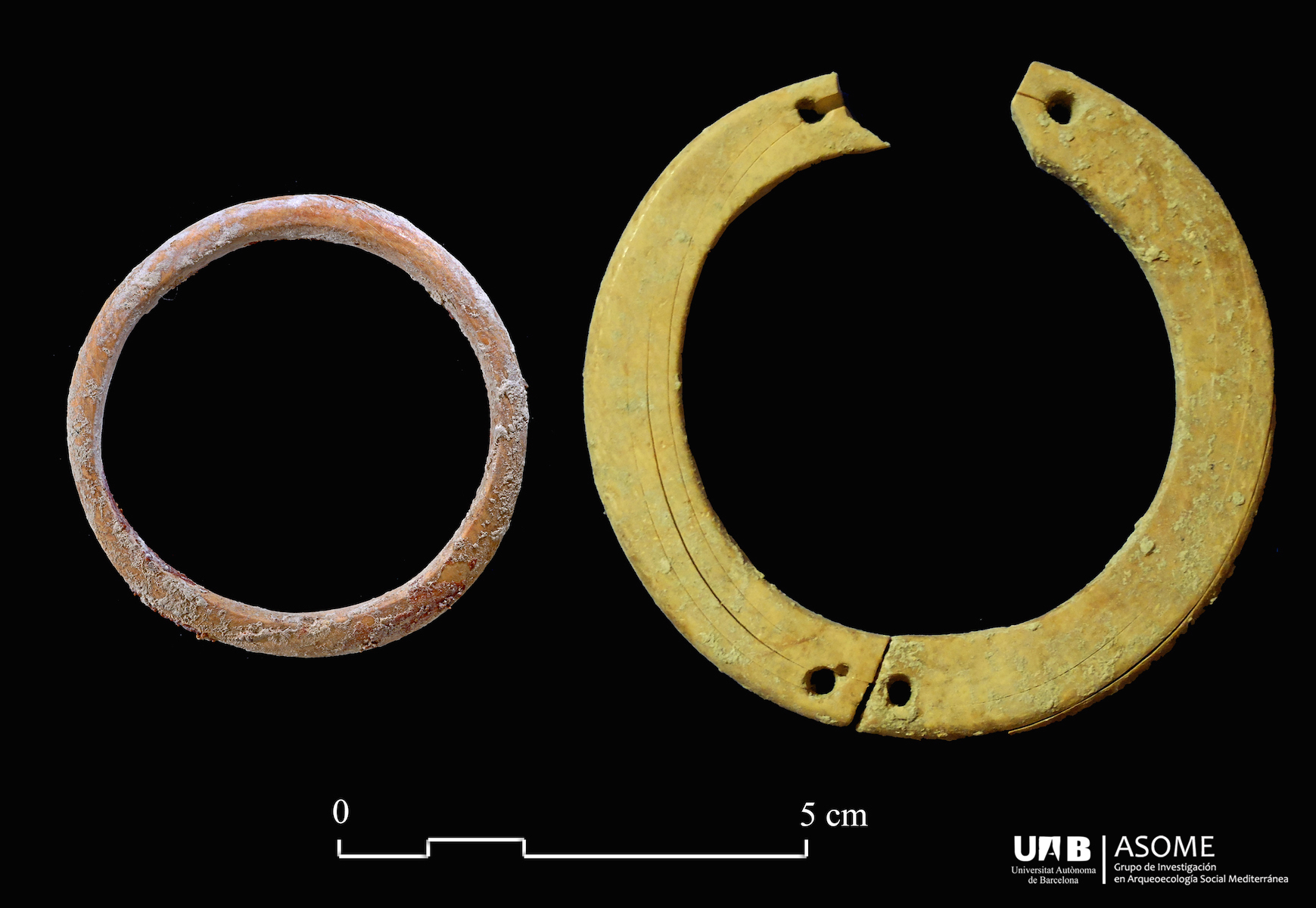
Among the most notable objects are these two bracelets, one made of shell with a closed hoop and that preserves areas tinted in red; and the other one made of ivory, made up of two arches with distal perforations to join them together with fine strings.

Despite the damage caused by looting holes and burrows, the 2021 excavation campaign has uncovered the architectural sequence of occupation of La Almoloya.